6 Vertical Growth Steps to Install a Sturdy Vegetable Garden Arch
A vegetable garden arch transforms a flat bed into a three-dimensional growing system, doubling your harvest footprint while creating microclimates beneath its canopy. The steps for installing a vegetable garden arch demand precision in anchoring, material selection, and structural engineering to support 40-60 pounds of mature vining crops. Metal and hardwood frames outperform bamboo or PVC in wind resistance and longevity, with galvanized steel arches rated for USDA Zones 3-9 enduring fifteen to twenty seasons without replacement. Soil compaction beneath anchor points can restrict root penetration by 30-40%, making site preparation as critical as the frame itself.
Materials and Soil Preparation
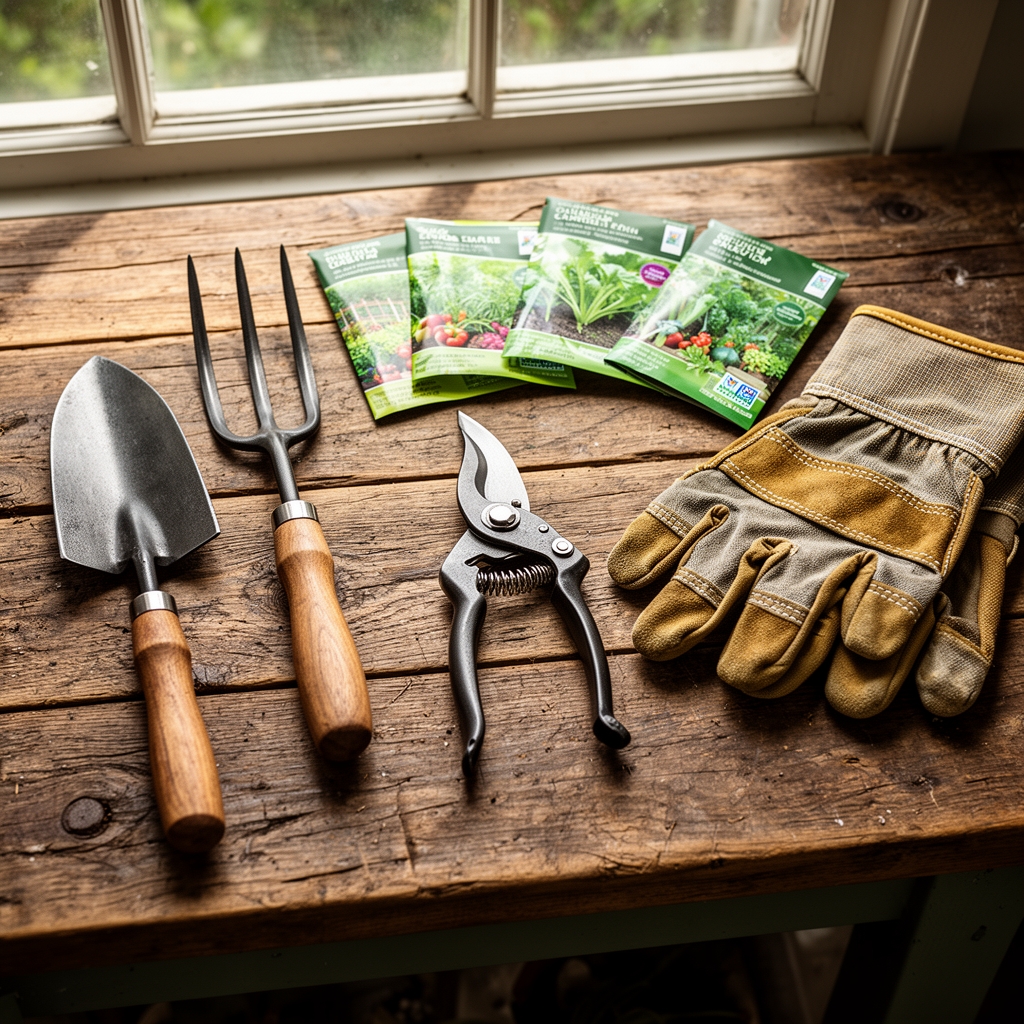
Select arches constructed from 0.5-inch diameter steel tubing or 2×2-inch cedar posts. Galvanized steel resists corrosion in soils with pH below 6.0, while untreated cedar contains natural thujaplicins that deter fungal colonization. Anchor stakes should penetrate 18-24 inches into mineral soil, bypassing the organic O-horizon to reach stable subsoil with higher cation exchange capacity.
Amend planting zones flanking the arch with a 4-4-4 organic fertilizer at 2 pounds per 10 square feet. This balanced NPK ratio supports vegetative growth in nitrogen-hungry climbers like pole beans (Phaseolus vulgaris) while providing adequate phosphorus for root establishment. Incorporate 1 inch of aged compost to raise soil organic matter to 5-7%, the threshold for optimal mycorrhizal colonization. Test pH with a calibrated meter; cucurbits and legumes perform best between 6.2-6.8, while tomatoes tolerate 6.0-7.0.
Pre-soak anchor points with 2 gallons of water per hole 24 hours before installation. This hydrates clay particles, reducing compaction damage during post insertion and preserving soil structure for lateral root expansion.
Timing and Hardiness Considerations
Install arches 3-4 weeks before the last spring frost date in Zones 5-7, or during the January-February window in Zones 8-10. Soil temperature must reach 50°F at 6-inch depth for beans and peas, and 60°F for cucumbers and melons. Use a soil thermometer at 8:00 AM for accurate readings unaffected by diurnal heating.
In frost-prone regions, delay planting warm-season vines until nighttime lows stabilize above 50°F. A single 28°F frost triggers ice crystal formation in cucumber xylem, causing irreversible vascular collapse. Cool-season crops like snap peas (Pisum sativum var. macrocarpon) tolerate 25°F and can be direct-sown 6 weeks before last frost, allowing the arch to support growth through late spring.
Installation Phases

Anchoring (Days 1-2)
Excavate four corner holes 24 inches deep using a post-hole digger or auger. Space holes 4-6 feet apart along the bed's length and 2-3 feet across its width. Insert vertical posts or stake sleeves, ensuring plumb alignment with a 24-inch level. Backfill with native soil mixed 50:50 with coarse sand to improve drainage and reduce frost heave in Zones 3-6. Tamp every 4 inches with a 2×4 tamper, applying 20-30 pounds of downward force to eliminate air pockets.
Pro-Tip: Coat the buried portion of wooden posts with copper naphthenate preservative to extend lifespan to 12-15 years without soil contamination.
Frame Assembly (Day 3)
Attach horizontal cross-members at 12-inch intervals using stainless steel bolts or UV-resistant zip ties rated for 50-pound tensile strength. Position the lowest cross-member 6 inches above soil level to prevent splash-back of soil-borne pathogens like Phytophthora capsici. Angle diagonal braces at 45 degrees from vertical posts to apex, distributing load across multiple vectors.
Test structural integrity by applying 30 pounds of downward pressure at the apex. Deflection should not exceed 1 inch. Reinforce weak joints with additional fasteners or guy wires anchored 3 feet from the base.
Pro-Tip: Install 4-inch mesh netting on the windward side to reduce wind load by 40% while maintaining 85% light transmission.
Sowing and Transplanting (Week 2-4)
Direct-sow pole beans 1 inch deep and 4 inches apart along the arch's base. Germination occurs in 7-10 days at 70°F soil temperature. Transplant cucumber or melon seedlings with 2-3 true leaves, spacing 12-18 inches apart. Bury stems up to the cotyledon node to stimulate adventitious root formation, increasing drought resilience by 25%.
Inoculate planting holes with 1 tablespoon of endomycorrhizal fungi (Glomus intraradices) to extend root reach by 10-15 times the original root hair zone, accessing phosphorus in low-availability soils.
Pro-Tip: Train the first lateral shoot at a 60-degree angle to stimulate auxin redistribution toward vertical growth, reducing ground sprawl.
Establishment (Week 4-8)
Guide tendrils onto the lowest cross-member within 5 days of emergence. Cucurbit tendrils exhibit thigmotropism, coiling within 60-90 minutes of contact. Bean vines twine counterclockwise in the Northern Hemisphere; manually wrap young stems if they fail to latch.
Apply 0.5 inch of water every 3 days during establishment, increasing to 1 inch per week during flowering and fruit set. Drip irrigation at the base reduces foliar moisture, cutting powdery mildew incidence by 60%.
Troubleshooting Common Issues
Symptom: Yellowing lower leaves with green veins (interveinal chlorosis).
Solution: Iron deficiency in alkaline soils. Apply chelated iron (Fe-EDDHA) at 1 ounce per gallon as a foliar spray or soil drench. Retest pH; values above 7.5 lock out micronutrient availability.
Symptom: Wilting at midday despite moist soil.
Solution: Root-knot nematodes (Meloidogyne spp.) constrict vascular flow. Remove affected plants and solarize soil under clear polyethylene for 6 weeks at 100°F to achieve 4-log reduction in nematode populations.
Symptom: Fruit drop before maturity.
Solution: Boron deficiency disrupts pollen tube elongation. Broadcast 0.5 pound of borax per 1,000 square feet, or apply 1 teaspoon per gallon as a foliar spray during bloom.
Symptom: Arch leaning 10+ degrees after 4 weeks.
Solution: Inadequate anchoring depth or wind damage. Drive 24-inch rebar stakes 6 inches from each post, securing with wire or hose clamps. Reinforce with diagonal braces.
Symptom: Sparse foliage, elongated internodes.
Solution: Insufficient light (below 6 hours direct sun). Relocate arch to full-sun exposure or prune overhanging branches to increase photosynthetically active radiation by 30%.
Maintenance Protocol
Water deeply every 7 days, delivering 1 inch measured with a rain gauge. Increase to twice weekly during fruit swell, as cucurbits demand 1.5-2 inches during peak transpiration. Mulch with 3 inches of straw or shredded leaves to stabilize soil temperature at 65-75°F and reduce evaporation by 50%.
Side-dress with 5-10-10 fertilizer at 1 pound per 10 feet of row when flowering initiates, broadcasting 6 inches from stems. Avoid high-nitrogen formulas after bloom; excess vegetative growth diverts energy from fruit production.
Prune lateral shoots beyond the sixth node on indeterminate cucumbers to concentrate resources in main stems. Remove senescent leaves below the first fruit cluster to improve airflow and reduce anthracnose spore loads.
Inspect weekly for cucumber beetles (Diabrotica spp.) and hand-pick adults before they vector bacterial wilt. Apply Bacillus thuringiensis var. tenebrionis for larval control if populations exceed 2 beetles per plant.
Frequently Asked Questions
How deep should arch posts be buried?
Bury posts 18-24 inches deep, reaching below the frost line in Zones 5 and colder. This prevents heave and provides lateral stability for 50-pound crop loads.
Can I install an arch in clay soil?
Yes, but amend post holes with 50% coarse sand to prevent waterlogging. Clay's low permeability causes anaerobic conditions that rot wooden posts within 3-4 years.
What is the ideal arch height?
Six to eight feet allows easy harvest access while maximizing vertical space. Lower arches restrict airflow, increasing humidity and fungal disease pressure by 35%.
Do I need to remove the arch in winter?
Metal and treated wood arches remain installed year-round. Remove netting and plant debris to prevent overwintering pests like squash vine borers (Melittia cucurbitae).
Which crops perform best on arches?
Pole beans, cucumbers, small-fruited melons, and peas. Avoid winter squash or watermelon; fruits exceeding 3 pounds require sling support or risk stem detachment at 85% maturity.