7 Year-Round Steps to Prepare a Year-Round Greenhouse
Learning how to prepare a garden for a greenhouse vegetable garden begins with understanding that the soil beneath a planned structure requires deeper intervention than open beds. Roots will cycle through the same volume for years. They will deplete micronutrients faster. They will encounter salt accumulation from synthetic feeds unless you engineer drainage and aeration from the foundation stage. The smell of turned compost meeting mineral subsoil marks the start of this work, a sharp sweetness cut by clay or sand depending on your native profile.
Materials
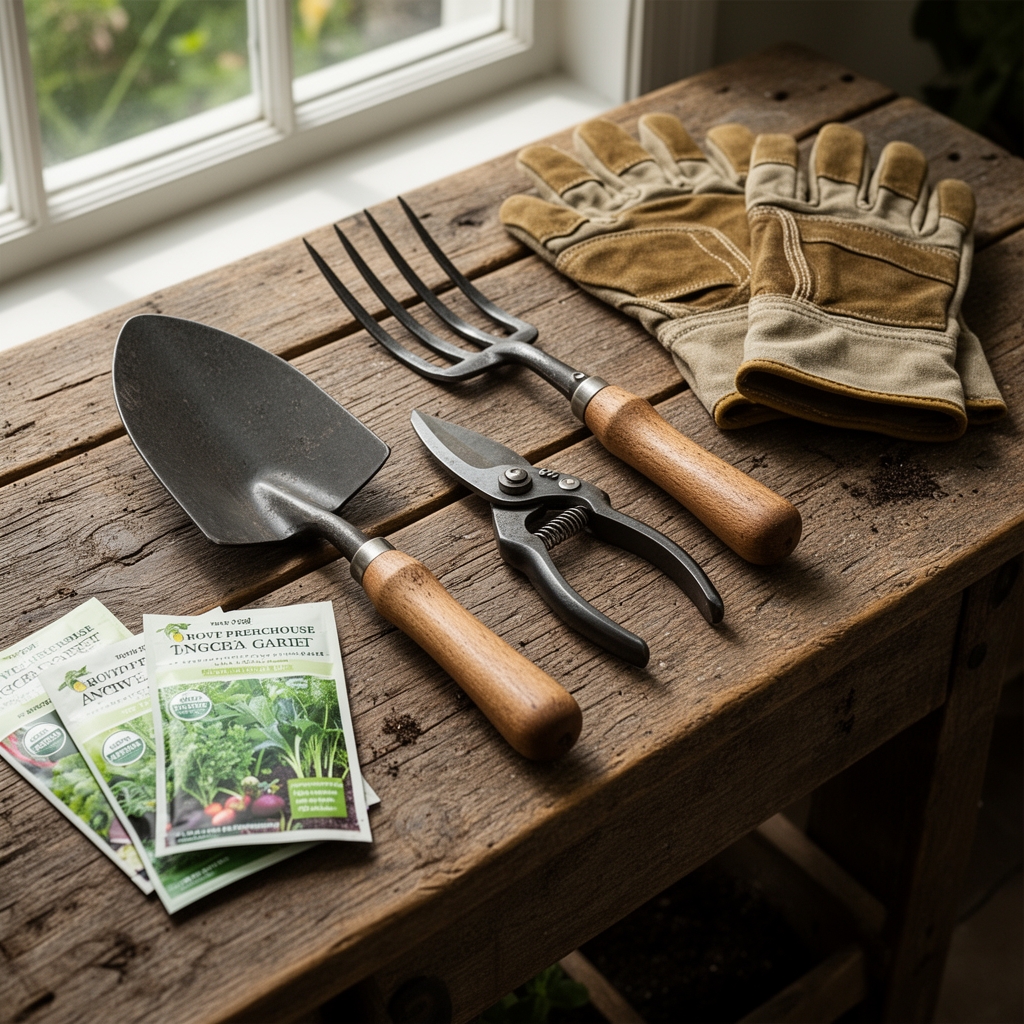
Begin with a soil test reporting pH, cation exchange capacity, and baseline NPK values. Target pH 6.2 to 6.8 for most fruiting vegetables. Aggregate amendments in three categories.
Carbon-Rich Amendments (Low NPK): Aged hardwood bark mulch, coconut coir (pH 5.5 to 6.5), or leaf mold. These improve structure and water retention without driving excessive vegetative growth.
Balanced Organic Meals (4-4-4 or 5-5-5): Feather meal, bone meal, and kelp blended products. Apply at 2 pounds per 100 square feet during initial bed construction. These release nitrogen through microbial mineralization over 8 to 12 weeks.
Mineral Correctives: Gypsum (calcium sulfate) at 5 pounds per 100 square feet if your test shows sodium above 50 ppm. Greensand (0-0-3) for potassium and iron in sandy profiles. Dolomitic lime only if magnesium registers below 50 ppm and pH is under 6.0.
Biological Inoculants: Mycorrhizal fungi granules (Glomus intraradices or Rhizophagus irregularis) at 1 teaspoon per transplant hole. Humic acid solution at 1 ounce per gallon applied post-planting to improve cation exchange.
Timing
Hardiness Zone dictates the preparation calendar. Zones 3 through 5 should complete soil work 6 to 8 weeks before the last spring frost, allowing microbial populations to establish before transplanting. Zones 6 through 8 can prepare beds in late winter (February through March) for April planting. Zones 9 and 10 gain flexibility; prepare beds year-round but avoid working saturated soil during rainy months.
For year-round cropping, stagger bed preparation. Renovate one-third of greenhouse soil every four months. This rotation prevents nutrient mining and allows fallow sections to receive cover crops like winter rye or crimson clover, which can be flail-mowed and incorporated as green manure.
Phases
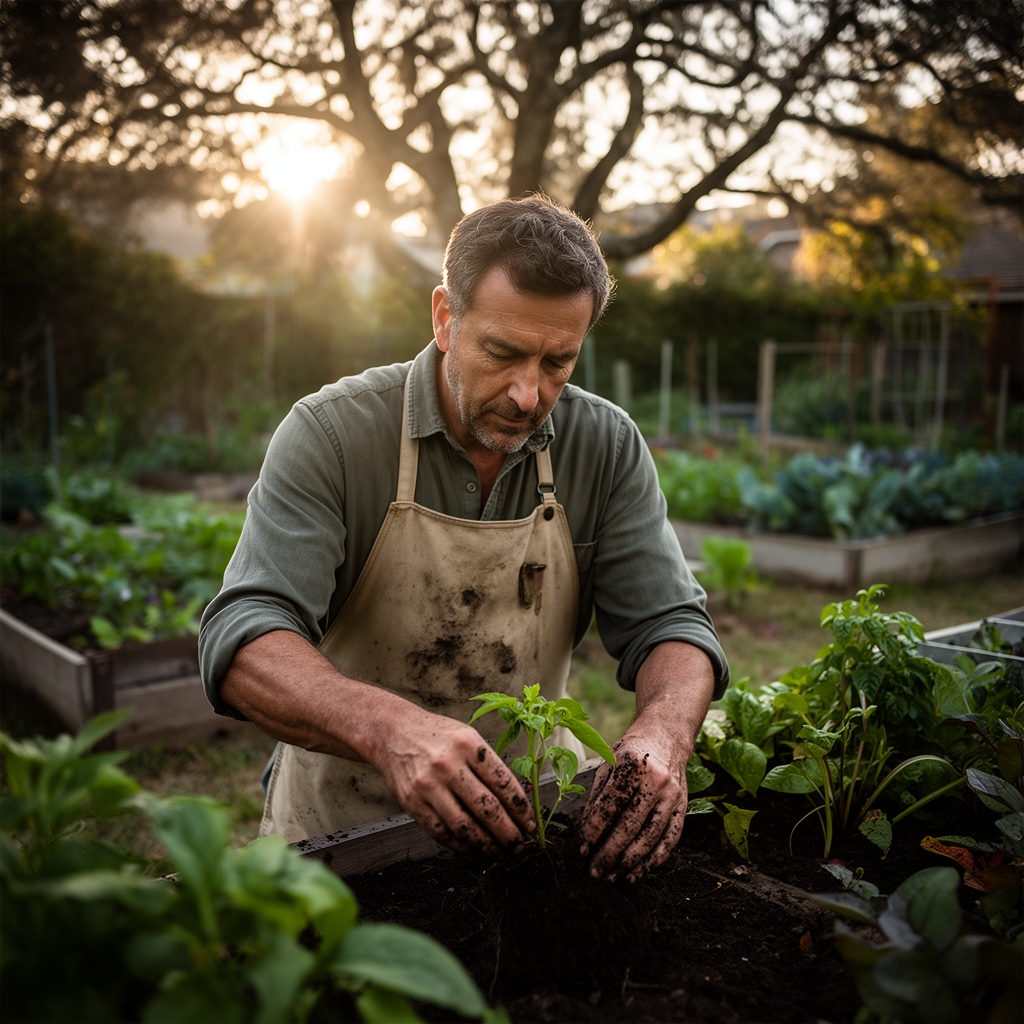
Sowing Phase (Weeks 1-3): Broadcast or drill pelleted seed directly into prepared beds if growing cool-season greens (lettuce, spinach, arugula). Maintain soil temperature at 50 to 65 degrees Fahrenheit using soil-heating cables set to 60 degrees. Water to field capacity, defined as the moisture level where a squeezed handful forms a ball but does not drip. Monitor germination rates; 80 percent emergence within 7 days indicates proper seed-to-soil contact.
Pro-Tip: Apply Trichoderma harzianum powder at seeding to suppress damping-off fungi. Mix 1 gram per liter of water and drench furrows immediately after covering seed.
Transplanting Phase (Weeks 4-6): Move seedlings at the 4- to 6-true-leaf stage. Dig holes 1.5 times the root ball diameter. Position the root crown level with the soil surface for tomatoes, peppers, and eggplants. Bury brassicas (broccoli, cabbage) slightly deeper to encourage adventitious rooting along the stem. Water each transplant with 8 ounces of liquid kelp solution (0-0-1 diluted at 1 tablespoon per gallon) to reduce transplant shock and stimulate root elongation via cytokinin activity.
Pro-Tip: Prune tomato seedlings at a 45-degree angle just above the cotyledon scar before transplanting. This encourages auxin distribution toward lateral root initiation rather than apical dominance.
Establishing Phase (Weeks 7-12): Monitor canopy expansion and adjust irrigation. Fruiting crops require 1.5 inches of water per week delivered via drip tape set 4 inches below the soil surface. Leafy greens need 1 inch. Install tensiometers at 6-inch depth; irrigate when readings exceed 30 centibars. Side-dress with blood meal (12-0-0) at 1 pound per 50 feet of row when first flowers appear on solanaceous crops. This pulse of nitrogen supports fruit set without delaying maturity.
Pro-Tip: Inoculate legume roots with Rhizobium bacteria at establishment. Apply 1 teaspoon of inoculant powder per plant in the planting hole to enable atmospheric nitrogen fixation, reducing fertilizer dependency by 30 percent over the growing season.
Troubleshooting
Symptom: Blossom-end rot on tomatoes (sunken, leathery black spots on fruit base).
Solution: Apply calcium chloride foliar spray at 1.5 grams per liter every 10 days. Ensure consistent soil moisture; fluctuations disrupt calcium translocation via xylem flow.
Symptom: Interveinal chlorosis on new growth (yellowing between leaf veins while veins remain green).
Solution: Iron deficiency induced by high pH. Drench soil with chelated iron (Fe-EDDHA) at 1 ounce per 10 gallons. Retest pH and lower with elemental sulfur if above 7.2.
Symptom: Whitefly adults clustering on leaf undersides.
Solution: Release Encarsia formosa parasitoid wasps at 5 per square meter every two weeks. Yellow sticky traps hung at canopy height capture adults; replace when 80 percent covered.
Symptom: Edema (corky lesions) on pepper and tomato leaves.
Solution: Reduce humidity below 70 percent by increasing ventilation. Edema results from rapid water uptake exceeding transpiration rate.
Symptom: Root aphids causing wilting despite adequate moisture.
Solution: Drench with Beauveria bassiana fungal spores at 1 tablespoon per gallon. Repeat every 14 days until new foliage shows recovery.
Maintenance
Topdress beds with 0.25 inches of worm castings every 6 weeks to maintain organic matter and microbial activity. Prune indeterminate tomatoes to one or two leaders, removing suckers when they reach 2 inches. This concentrates photosynthate into fruit rather than vegetative mass. Mulch pathways with straw at 3-inch depth to suppress weeds and moderate soil temperature swings. Test electrical conductivity monthly; values above 2.0 mS/cm indicate salt buildup. Leach with 2 inches of water applied slowly over 4 hours to push salts below the root zone.
FAQ
When should I replace greenhouse soil entirely?
Every 5 to 7 years if you maintain organic matter above 5 percent and rotate crops. Sooner if soil-borne diseases like Verticillium wilt appear.
Can I use garden soil directly under a new greenhouse?
Only after amending. Native soil often lacks the porosity and nutrient density required for intensive production. Blend 2 parts native soil with 1 part compost and 1 part perlite.
What cover crop works best between winter and spring crops?
Crimson clover in Zones 6 and warmer. Winter rye in Zones 5 and colder. Both fix nitrogen and add organic matter when terminated at flowering.
How do I prevent soil compaction in high-traffic areas?
Install 2-foot-wide landscape fabric pathways topped with pea gravel. Avoid walking on planting beds; use kneeling boards to distribute weight.
Should I solarize soil before planting?
Yes, if starting in summer. Cover moist soil with clear 2-mil plastic for 6 weeks when daytime temperatures exceed 85 degrees Fahrenheit. This pasteurizes the top 6 inches, killing weed seeds and pathogens.