7 Propagating Tips to Use a Garden Knife for Perennial Crops
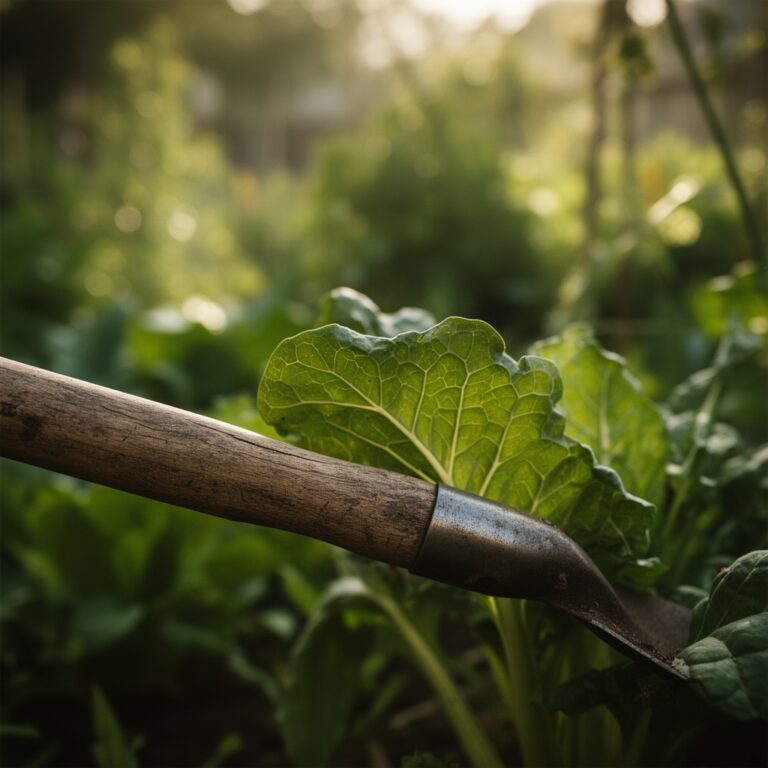
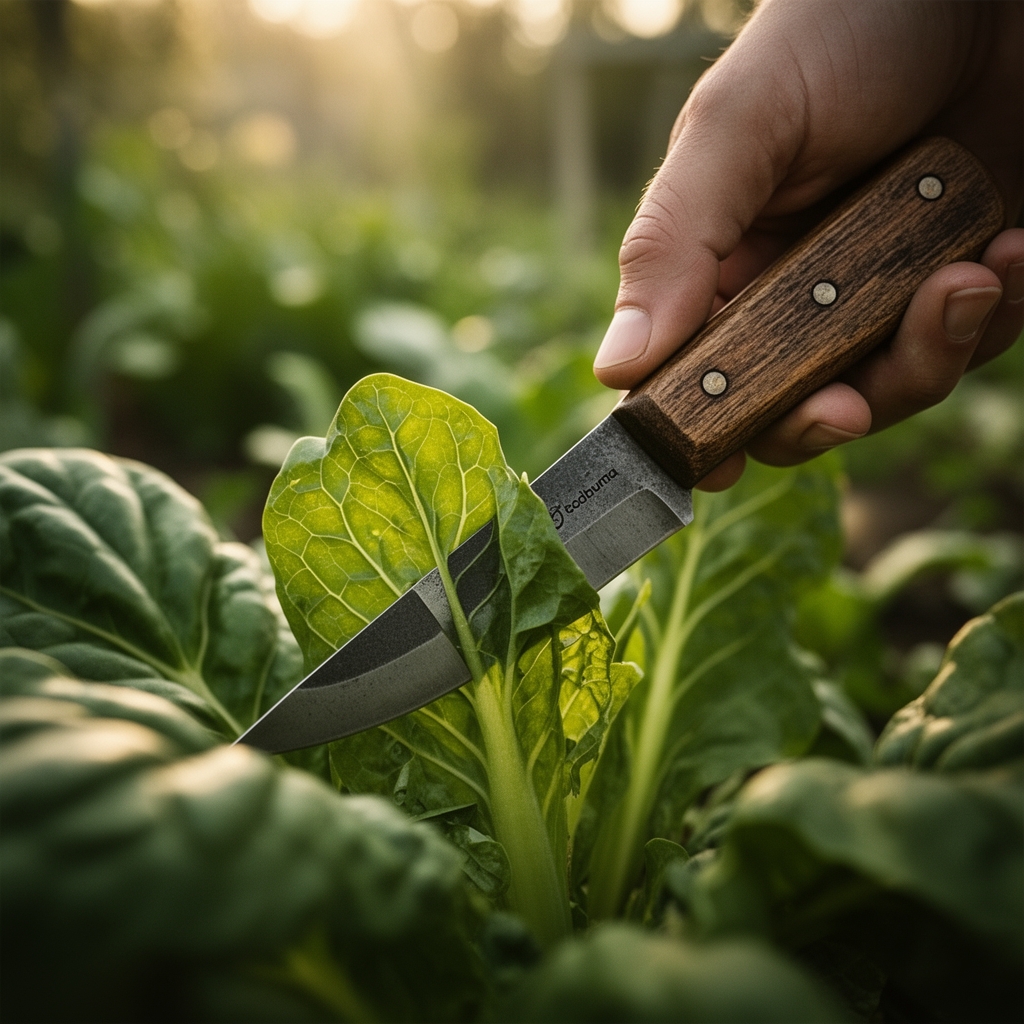
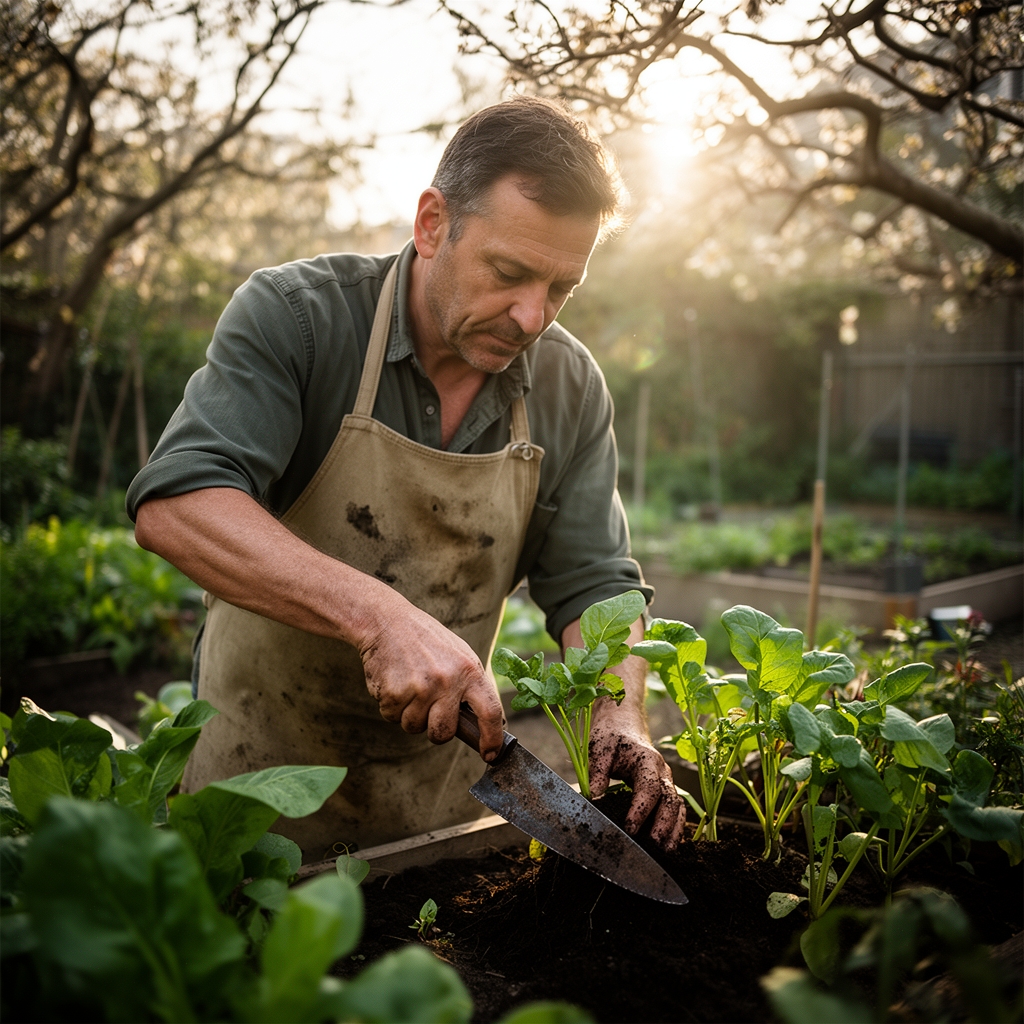
The blade slides through the crown of an established rhubarb plant with a single clean stroke, severing fibrous roots and revealing the pale interior of dormant buds. Using a garden knife for vegetable dividing transforms an overgrown clump into four vigorous divisions, each carrying enough stored carbohydrate to establish before summer heat arrives. The hori-hori's serrated edge cuts through dense root mats that would frustrate a spade, while its pointed tip leverages apart rhizomes without tearing cambium tissue.
Materials
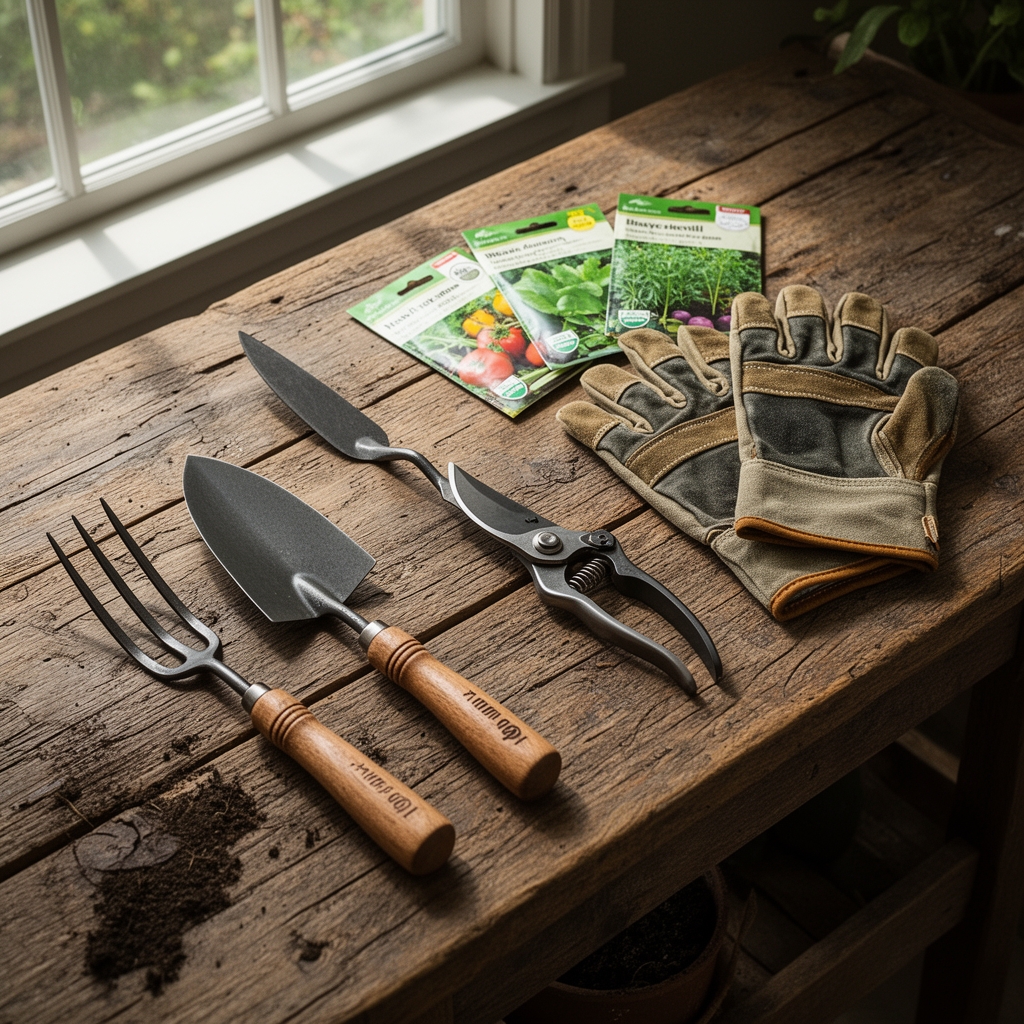
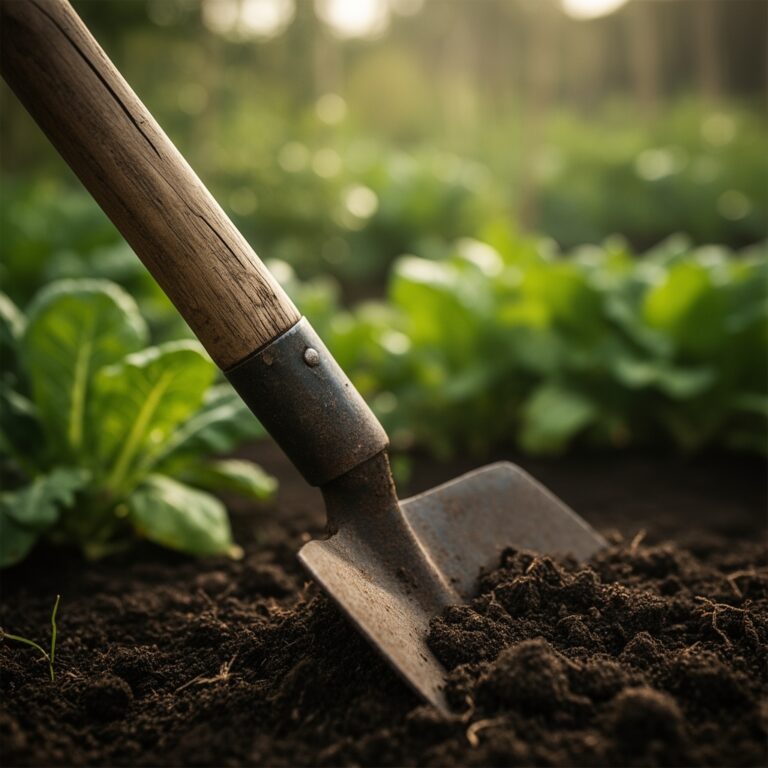
Select a hori-hori knife with a 7-inch blade stamped from carbon steel rather than stainless alloys. Carbon steel holds a sharper edge through repeated cuts into soil with pH ranging from 5.8 to 7.2. Sterilize the blade between plants using a 10 percent bleach solution or 70 percent isopropyl alcohol to prevent transmission of bacterial soft rot and viral pathogens.
Prepare a transplant bed amended with compost that delivers a balanced 4-4-4 nutrient ratio from composted poultry manure, bone meal, and kelp meal. This slow-release formulation supports root initiation without promoting excessive foliar growth that stresses newly divided crowns. Test cation exchange capacity before dividing; soils below 10 meq/100g require additional organic matter to buffer moisture fluctuations during the establishment phase.
Source mycorrhizal inoculant containing Glomus intraradices and Rhizophagus irregularis spores at concentrations of 300 propagules per gram. These arbuscular mycorrhizal fungi colonize 80 percent of herbaceous perennial root systems, extending phosphorus uptake beyond the rhizosphere depletion zone. Apply inoculant directly to cut root surfaces before replanting to accelerate auxin distribution and adventitious root formation.
Timing
Execute division during dormancy windows that align with USDA Hardiness Zones and local frost-date calendars. In Zones 3 through 6, divide spring-emerging perennials like asparagus, rhubarb, and sorrel between March 15 and April 30, when soil temperatures reach 45°F but before shoot elongation begins. Fall division occurs from September 1 through October 15, allowing six weeks for root establishment before the first 28°F freeze event.
Zones 7 through 9 permit extended fall division from October 1 through November 30, capitalizing on mild soil temperatures that maintain microbial activity and root growth. Avoid dividing during summer months when transpirational demand exceeds root system capacity to replace water lost through cut surfaces. Perennials divided during active growth exhibit 40 percent higher mortality rates compared to dormant-season division.
Phases
Sowing and Initial Division
Lift the parent plant using a spading fork inserted 8 inches from the crown perimeter. Shake soil from roots to expose natural division planes where individual growth points separate. Position the knife blade vertically through the crown center, applying downward pressure in a single motion rather than sawing. Each division must contain three to five buds and a root mass measuring at least 4 inches in diameter.
Pro-Tip: Cut at a 90-degree angle perpendicular to the soil line. Angled cuts expose greater surface area to pathogens and delay wound callusing by 3 to 5 days compared to perpendicular cuts.
Transplanting
Excavate planting holes to a depth matching the original crown height. Shallow planting that exposes crown tissue to air reduces winter survival by 25 percent in Zones 4 and colder. Deep planting that buries crowns more than 1 inch below grade triggers anaerobic conditions and crown rot in poorly drained soils.
Dust cut surfaces with powdered sulfur at 1 tablespoon per division to lower localized pH to 5.5, inhibiting fungal spore germination. Place divisions in holes, spread roots in a radial pattern, and backfill with amended soil. Firm soil with hand pressure to eliminate air pockets that desiccate fine root hairs.
Pro-Tip: Inoculate root zones with 2 tablespoons of mycorrhizal powder mixed into backfill soil. Direct contact between spores and root surfaces increases colonization rates from 30 percent to 75 percent within 14 days.
Establishing
Apply 2 inches of shredded hardwood mulch in a 12-inch radius around each division, maintaining a 2-inch gap at the crown to prevent moisture accumulation and bacterial soft rot. Monitor soil moisture at 4-inch depth using a tensiometer; maintain readings between 10 and 25 centibars during the first 60 days post-division.
Pro-Tip: Foliar spray divisions with kelp extract diluted to 1 tablespoon per gallon every 10 days for the first month. Kelp-derived cytokinins stimulate lateral root formation, increasing root density by 35 percent compared to untreated controls.
Troubleshooting
Symptom: Crown tissue turns brown and soft within 7 days of division.
Solution: Bacterial soft rot caused by Erwinia species. Remove affected tissue with a sterilized knife, cutting 1 inch into healthy tissue. Dust wounds with sulfur and reduce irrigation frequency by 50 percent.
Symptom: Leaves emerge yellow with interveinal chlorosis.
Solution: Iron deficiency induced by transplant shock disrupting root ferric chelate uptake. Apply chelated iron (Fe-EDDHA) at 1 ounce per gallon as a soil drench. Symptoms resolve within 14 days.
Symptom: New shoots wilt at midday despite adequate soil moisture.
Solution: Insufficient root-to-shoot ratio. Prune foliage by 30 percent to reduce transpirational load. Roots regenerate to support remaining tissue within 21 days.
Symptom: White, cottony growth appears on crown surfaces.
Solution: Southern blight (Sclerotium rolfsii) thrives in warm, moist conditions. Remove mulch from crown area, apply granular PCNB fungicide at 2 pounds per 1,000 square feet, and increase air circulation.
Maintenance
Provide 1 inch of water per week through drip irrigation or soaker hoses positioned 6 inches from crowns. Overhead irrigation increases foliar disease incidence by 60 percent. Apply a side-dressing of 5-10-10 fertilizer at 2 pounds per 100 square feet eight weeks post-division, when new root growth extends 6 inches from the crown.
Remove flower stalks during the first growing season to redirect carbohydrate reserves toward root development rather than seed production. Plants that flower in year one produce 40 percent less harvestable biomass in year two compared to those with flowers removed.
FAQ
How deep should I cut when dividing fibrous-rooted perennials?
Cut to a depth matching the root system extent, typically 6 to 8 inches for established sorrel and 10 to 12 inches for asparagus crowns.
Can I divide perennials in containers?
Yes. Remove the root ball, cut with vertical strokes, and repot divisions in containers 2 inches wider than the root mass diameter.
What is the minimum division size for survival?
Each division requires three active buds and a root mass measuring at least 3 inches in diameter to support metabolic demands during establishment.
How long until divided perennials reach harvest maturity?
Most vegetable perennials require one full growing season post-division. Asparagus requires two seasons to rebuild crown reserves sufficient for harvest.
Should I fertilize immediately after dividing?
No. Wait 30 days to allow wound callusing and root initiation before applying nitrogen, which promotes shoot growth at the expense of root development.