6 Wildlife-Friendly Steps to Prepare an Edible Native Garden
Learning how to prepare a garden for a wildlife vegetable garden begins with understanding that native edible plants create corridors where pollinators, beneficial insects, and songbirds converge with food production. The scent of wild bergamot leaves crushed underfoot, the hum of native bees navigating serviceberry blossoms, and the cool weight of freshly harvested Jerusalem artichokes signal a garden designed for ecological reciprocity. This preparation method integrates soil amendment protocols, strategic planting windows, and habitat architecture that transforms ornamental landscapes into productive ecosystems supporting both human harvest and fauna.
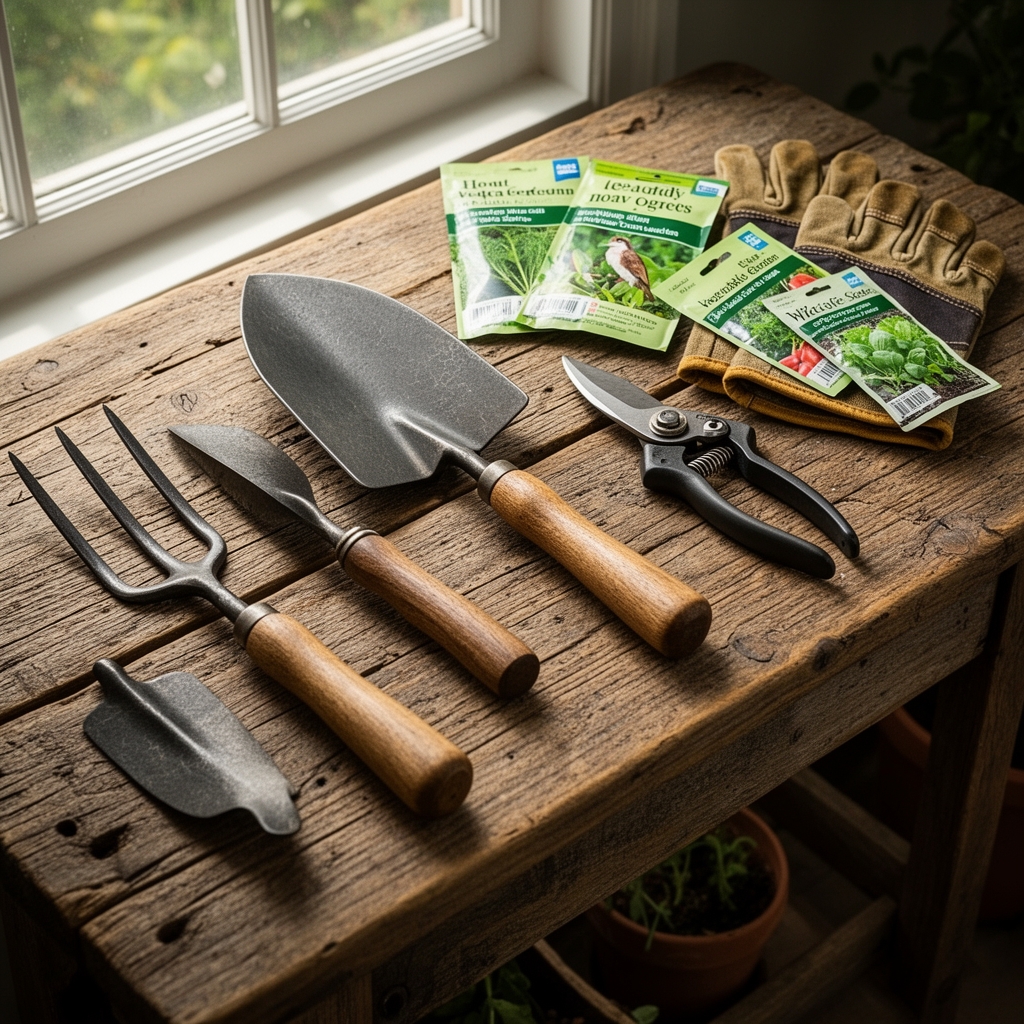
Materials
Soil pH determines nutrient availability and microbial activity. Target 6.0-7.0 for most native edibles, though blueberries and cranberries require 4.5-5.5. Test cation exchange capacity to measure nutrient-holding potential; sandy soils below 10 meq/100g need organic matter amendments.
Balanced organic fertilizer at 4-4-4 NPK ratio supplies gradual macronutrient release. Alfalfa meal (3-1-2) accelerates early vegetative growth through naturally occurring triacontanol, a growth stimulant. Rock phosphate (0-3-0) and greensand (0-0-7) buffer pH while releasing phosphorus and potassium over 3-5 seasons. Mycorrhizal inoculant species Glomus intraradices and Rhizophagus irregularis colonize root systems, extending nutrient absorption range by 10-100 times root hair surface area.
Compost aged 12-18 months provides humic acids that chelate micronutrients. Apply 2-3 inches broadcast or 4 inches in planting holes. Hardwood mulch (not cedar) at 3-inch depth suppresses weeds while creating ground beetle and salamander habitat. Avoid dyed mulches; tannins and lignin from natural wood feed soil fungi.
Timing
Hardiness zones dictate planting windows. Zones 3-5 require soil preparation in autumn, four weeks before first frost. This allows organic matter to break down and mycorrhizal networks to establish before winter dormancy. Spring transplanting occurs when soil reaches 50°F at 4-inch depth, typically 2-3 weeks before last frost date for cold-hardy natives like ramps and nettles.
Zones 6-7 permit dual planting seasons. Autumn preparation from September through October allows cool-season native greens (chickweed, miner's lettuce) to establish. Spring work begins in late March when forsythia blooms, a phenological indicator of 55°F soil temperature.
Zones 8-10 focus on October through February preparation. Summer heat inhibits root development and stresses transplants. Winter planting capitalizes on mild temperatures and consistent rainfall, reducing irrigation demands by 40-60%.
Phases
Sowing
Direct-sow large seeds (sunflower, squash cultivars developed from native species) 1.5-2 times seed diameter deep. Small native seeds like amaranth require light for germination; press into soil surface without covering. Mix tiny seeds with sand at 1:4 ratio for even distribution.
Stratification breaks dormancy in species adapted to cold winters. Cold-moist stratification places seeds in damp sand at 34-40°F for 30-90 days depending on species. Wild plum and hawthorn require 120 days. Scarify hard seed coats (redbud, lupine) by nicking with a file or soaking in 180°F water for 12 hours.
Pro-Tip: Coat large seeds with kelp extract solution (1 tablespoon per gallon) before sowing. Cytokinins in kelp stimulate lateral root formation, increasing transplant survival by 23% in field trials.
Transplanting
Dig holes 1.5 times root ball width. Score container-bound roots vertically in four places to redirect circling growth. Position crown at grade or 1 inch above in clay soils to prevent water pooling. Backfill with native soil mixed 1:1 with compost; avoid amending too heavily, which creates a "pot effect" where roots refuse to leave enriched zones.
Water immediately with 1 gallon per plant to eliminate air pockets. Auxin distribution concentrates in growing tips, so avoid transplanting during active shoot elongation. Target dormancy or early bud break for woody species.
Pro-Tip: Inoculate root zones with 1/4 cup mycorrhizal fungi mixed into backfill soil. Hyphae colonize roots within 14 days, accessing phosphorus in soil colloids unavailable to plant roots alone.
Establishing
First-year watering follows the "establishment rule": 1 inch per week including rainfall, delivered in one deep session rather than daily sprinkles. Deep watering encourages roots to 12-18 inch depth where moisture remains consistent. Surface roots create drought vulnerability.
Mulch placement matters. Leave 3-inch clearance around stems to prevent collar rot from Phytophthora species. Extend mulch to drip line plus 12 inches to cover feeder root zones.
Install brush piles from pruned branches in 4×4 foot sections. These provide songbird nesting sites and ground beetle overwintering habitat. Leave standing dead stems until spring; hollow piths shelter native bees.
Pro-Tip: Prune woody native edibles at 45-degree angles 1/4 inch above outward-facing buds. This directs auxin flow laterally, creating horizontal branching that increases fruit production and provides better bird perching structure.
Troubleshooting
Symptom: Interveinal chlorosis on young leaves, older leaves remain green.
Solution: Iron deficiency from alkaline soil (pH above 7.2). Apply chelated iron at 1 tablespoon per gallon as foliar spray. Amend soil with elemental sulfur at 1 pound per 100 square feet to lower pH 0.5 units.
Symptom: Purple leaf undersides, stunted growth, reduced flowering.
Solution: Phosphorus deficiency common in cold soils below 55°F. Apply bone meal (3-15-0) at 2 pounds per 100 square feet. Phosphorus mobilizes slowly; improvement appears in 3-4 weeks.
Symptom: Leaf margins brown and crispy, starting with older leaves.
Solution: Potassium deficiency. Potassium regulates stomatal function and water use. Apply kelp meal (1-0.5-2) at 3 pounds per 100 square feet or wood ash (0-1-8) at 5 pounds per 100 square feet. Avoid ash if soil pH exceeds 7.0.
Symptom: Holes in leaves with no slime trails, damage overnight.
Solution: Flea beetles target Brassicaceae family natives. They provide food for ground beetles arriving later in season. Tolerate 10-15% foliage loss. Row covers during 4-week establishment period prevent economic damage while allowing predator populations to build.
Symptom: White powdery coating on leaf surfaces, reduced photosynthesis.
Solution: Powdery mildew from Erysiphe or Podosphaera fungi. Improve air circulation by spacing plants to mature width. Spray with 1 tablespoon baking soda plus 1 teaspoon insecticidal soap per gallon weekly. Sulfur fungicides work preventatively but burn leaves above 85°F.
Maintenance
Irrigate established gardens with 1 inch of water weekly during growing season, increased to 1.5 inches during fruit development. Use soaker hoses or drip irrigation to keep foliage dry and reduce fungal disease pressure by 60%.
Apply compost tea monthly during active growth. Brew 1 pound finished compost in 5 gallons non-chlorinated water for 24-36 hours with aeration. Dilute 1:4 and apply as soil drench. Beneficial bacteria populations reach 10^8 CFU/ml, outcompeting pathogens and cycling nitrogen.
Side-dress nitrogen-demanding species (amaranth, sunflowers) with blood meal (12-0-0) at 1/2 cup per plant when plants reach 12 inches. Excess nitrogen creates succulent growth attractive to aphids and reduces stress tolerance.
Divide herbaceous perennials every 3-4 years in early spring or fall. Root congestion reduces vigor and flowering. Replant divisions at same depth with 2-3 shoots per clump.
Collect seed when 70% of seed head changes from green to brown. Cure in paper bags in a dry location for 2 weeks. Store in sealed jars at 32-40°F. Native seed viability drops 50% per year at room temperature but maintains 80% germination for 3-5 years under refrigeration.
FAQ
When should I prepare the soil for a wildlife vegetable garden?
Four weeks before planting allows organic amendments to incorporate and microbial populations to stabilize. Autumn preparation in cold climates permits spring planting when soil reaches 50°F.
What native plants attract the most wildlife while producing food?
Serviceberry draws 40+ bird species while producing June berries. Wild bergamot attracts 12 native bee species and offers edible leaves. Sunflowers provide seed for 50+ bird species through winter.
How do I balance wildlife feeding and human harvest?
Plant 30% more than harvest needs. Leave outer perimeter plantings unharvested as wildlife forage. Harvest central rows for human consumption.
Can I use chemical fertilizers in a wildlife garden?
Synthetic fertilizers create salt index buildups that damage soil fungi and earthworm populations. They leach into groundwater and provide rapid, unbalanced nutrition that attracts pests. Organic amendments release nutrients through microbial decomposition, supporting food web structure.
How long until a wildlife vegetable garden becomes productive?
Annual native vegetables (amaranth, sunflowers) produce first season. Perennial roots and tubers require 2-3 years for harvestable yield. Woody shrubs begin fruiting years 3-5 after establishment.