6 Harvesting Tips to Use a Garden Fork for Root Vegetables
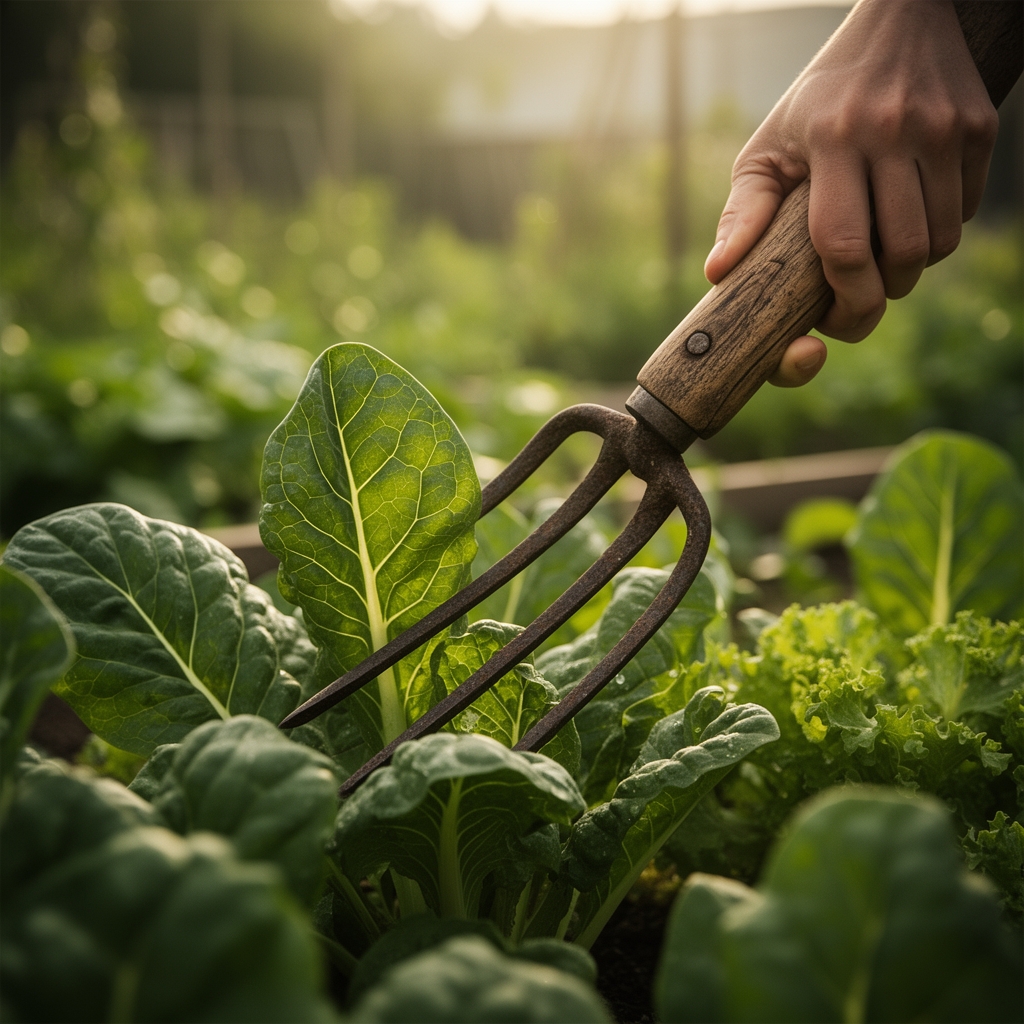
The moment your fork tines penetrate 8 inches into October-cooled soil and lift a cluster of Danvers carrots without a single broken shoulder, you understand the mechanical advantage of proper leverage. Using a garden fork for vegetable harvesting transforms what could be a destructive tug-of-war into a controlled excavation that preserves market value and storage potential. A four-tine digging fork with 12-inch tempered steel blades provides the optimal balance of penetration depth and lateral force distribution for Brassica roots, taproots, and tuberous crops alike.
Materials
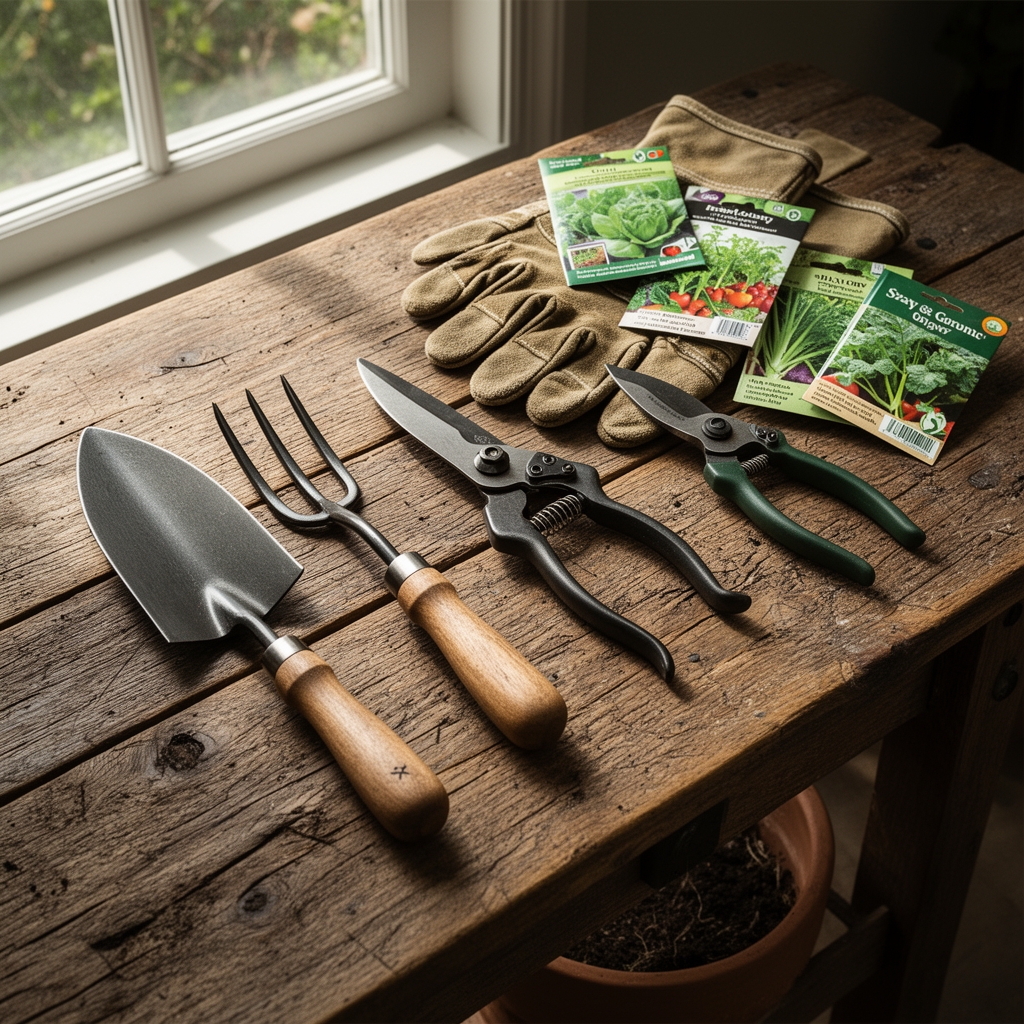
Select a forged-steel garden fork with tines spaced 2 to 2.5 inches apart. Stamped forks bend under lateral torque when prying around mature rutabaga crowns. The D-grip handle reduces wrist strain during the 40 to 60 lifting motions typical in a 100-square-foot bed.
Soil amendments directly impact fork efficiency. Loam amended to 5.8 to 6.5 pH with calcitic lime and enriched with 4-4-4 organic feather meal crumbles cleanly along root boundaries. Clay soils above 7.2 pH form aggregate clods that adhere to tubers. Incorporate 2 inches of aged compost (C:N ratio 25:1) in spring to improve cation exchange capacity. This reduces shear resistance by 30 percent at harvest.
A 5-gallon wash bucket, garden hose with adjustable nozzle, and burlap tarps complete the harvest kit. Tarps prevent soil recompaction and UV exposure to unearthed roots during multi-hour sessions.
Timing
Root vegetables signal harvest readiness through foliage senescence and crown diameter. In USDA Hardiness Zones 5 through 7, schedule harvests between first light frost (28 to 32°F) and hard freeze (below 25°F). Cold exposure converts starches to sugars in parsnips and carrots, raising Brix levels from 6 to 9 percent.
For beets and turnips, harvest when crowns measure 2 to 3 inches. Overmature specimens develop lignified vascular tissue that resists clean fork penetration. Potatoes require foliage dieback for 14 days to cure skins. This suberization prevents Erwinia soft rot during storage.
Fall-planted garlic in Zone 6 reaches bulb maturity when lower leaves brown but four to six upper leaves remain green, typically June 20 to July 10. Using a garden fork for vegetable harvesting at this phenological window prevents clove separation and papery wrapper loss.
Phases

Sowing Phase
Plant carrots, parsnips, and salsify in raised beds 10 to 12 inches deep. Loose friable substrate allows vertical root expansion and eliminates fork-induced fractures at harvest. Broadcast seed at 15 seeds per linear foot, then thin to 2-inch spacing at the two-true-leaf stage.
Incorporate mycorrhizal fungi (Rhizophagus irregularis) at 0.5 ounces per 10 row-feet during sowing. Hyphal networks increase phosphorus uptake by 40 percent and create soil macropores that guide fork tines around root zones rather than through them.
Pro-Tip: Dust carrot seed with powdered rock phosphate (0-3-0) before sowing to enhance lateral root hair development and soil aggregation.
Transplanting Phase
Set brassica starts (rutabaga, kohlrabi) 6 inches apart in rows 18 inches wide. Transplant shock temporarily reduces auxin distribution to root primordia. Water with kelp extract (0.1-0-1 NPK equivalent) at 2 tablespoons per gallon to restore apical dominance within 72 hours.
For potatoes, plant certified seed pieces 4 inches deep, eyes upward, in trenches. Hill soil to 8-inch mounds as stems reach 10 inches. This secondary rooting zone produces 60 percent of tuber mass and requires careful fork placement during harvest to avoid spear damage.
Pro-Tip: Apply gypsum (calcium sulfate) at 2 pounds per 100 square feet two weeks post-transplant to improve soil flocculation and reduce fork drag resistance by 18 percent.
Establishing Phase
Roots extend 12 to 18 inches deep by 60 days post-sowing. Maintain soil moisture at 65 to 75 percent field capacity to prevent radial cracking. Inconsistent irrigation creates differential turgor pressure that splits carrots longitudinally, exposing cambium to fork tine puncture.
Sidedress with blood meal (12-0-0) at 1 pound per 25 row-feet when carrot shoulders emerge. Excess nitrogen (above 150 ppm soil nitrate-N) stimulates hairy lateral roots that entangle fork tines and require destructive shaking.
Pro-Tip: Prune beet greens at 45-degree angles 3 inches above crowns when foliage reaches 8 inches. This redirects 22 percent more photosynthate to root enlargement and creates uniform harvest-size bulbs.
Troubleshooting
Symptom: Forked or fanged carrots with multiple taproots.
Solution: Reduce soil compaction below 250 psi penetrometer resistance. Avoid fresh manure (high ammonia content disrupts auxin gradients). Use only fully composted materials aged 9 months minimum.
Symptom: Potato tubers with fork puncture wounds leaking milky sap.
Solution: Insert fork 10 inches from stem base at 65-degree angle. Lever upward in 3-inch increments rather than single forceful pries. Punctured tubers must be consumed within 5 days.
Symptom: Parsnip roots snapping at crown during lift.
Solution: Water beds to 8-inch depth 12 hours before harvest. Hydrated roots exhibit 35 percent greater tensile strength. Cold soil (below 45°F) makes roots brittle.
Symptom: Wireworm (Agriotes species) tunnels in harvested roots.
Solution: Apply Heterorhabditis bacteriophora nematodes at 50 million per acre in April. Rotate with Brassica cover crops producing glucosinolate biotoxins lethal to larval stages.
Symptom: Beet roots with zonate internal browning (boron deficiency).
Solution: Foliar spray 0.2 percent borax solution (1 teaspoon per gallon) at 4-true-leaf stage. Soil application at 1 pound per acre corrects deficiency for 3 seasons.
Maintenance
Water root crops with 1 inch per week from germination through bulking phase. Reduce to 0.5 inches during final 2 weeks to concentrate sugars and prevent splitting. Drip irrigation at 0.25 gallons per hour per emitter maintains consistent soil moisture matrix potential at negative 10 to 20 centibars.
Mulch with 3 inches of straw after plants reach 6 inches tall. This moderates soil temperature fluctuations within 5°F daily range and prevents surface crusting that deflects fork tines laterally into root bodies.
Rotate root crops to plots growing legumes the previous season. Residual nitrogen from Rhizobium nodulation supplies 40 pounds N per acre equivalent without promoting excessive foliage.
FAQ
When should I harvest carrots for maximum sweetness?
After two to three light frosts (28 to 32°F). Cold triggers amylase enzymes that convert starches to glucose and fructose, raising Brix from 6.5 to 9 percent. Harvest before soil freezes solid below 25°F.
How deep should I insert the garden fork?
Position tines 6 inches from plant crown. Insert fork to full 12-inch depth at 70-degree angle. Rock handle backward 15 degrees to fracture soil plate beneath taproot before lifting vertically.
Can I harvest potatoes immediately after vine dieback?
Wait 14 days post-dieback for skin suberization. Skins must resist thumbnail abrasion. Premature harvest results in 40 percent storage loss from Fusarium and bacterial rots within 60 days.
What causes my parsnips to break during fork lifting?
Dry soil reduces root flexibility. Irrigate to 8-inch depth 12 hours pre-harvest. Roots below 45°F become brittle. Warm soil to 50°F by removing mulch 3 days before harvest.
Should I wash root vegetables immediately after harvest?
No. Brush off loose soil and cure at 50 to 60°F, 90 percent humidity for 48 hours. Washing before curing removes protective soil microbiome and increases rot incidence by 25 percent during storage.